 Driftwood Defense
Termite control in Wollochet: what local homes actually need
Termite control in Wollochet requires an approach that matches the area’s particular blend of sound-side air, dense conifers, and older waterfront construction. Houses along Wollochet Drive and nearby lanes often sit close to moisture, with shaded crawlspaces and exterior wood that stays damp longer than inland lots. Subterranean termites can move up from soil retained by hillside foundations, while dampwood termites take advantage of already wet support timbers. Our local service area includes the full Wollochet community from the shoreline curves up through the residential slopes, with inspections that account for the area’s persistent dampness.
When treating in Wollochet, we focus on the transition zones where soil, foundation, and siding meet, because those are the most common entry paths here. We also check piers, decks, and retaining walls, which are frequently overlooked but are prime termite habitat near the water. The goal is not just to kill the current colony but to reduce the moisture and wood-to-ground contact that make Wollochet properties attractive to termites in the first place.
Termite control in Wollochet means defending homes against the persistent dampness that rolls off Puget Sound and settles into basements, crawlspaces, and shore-facing siding. This quiet Gig Harbor peninsula has a mix of wooded lots and waterfront homes, and both environments can hide termite activity until the damage is already underway.
We provide Wollochet homeowners with inspections and treatments that respect the neighborhood’s landscape while targeting the specific termite species active in this part of Pierce County. Whether you are on a heavily treed hillside or close to the tideline, the route termites take into your home here is often shaped by moisture as much as by wood.
One call is all it takes to start.
What makes termite control different in Wollochet
Marine climate challenges
Wollochet’s moisture levels from Puget Sound create ideal conditions for dampwood and subterranean termites, so treatments are tailored to sustained humidity.
Discreet shoreline protection
Treatments are designed to avoid disturbing the natural shoreline and wooded buffers that define much of Wollochet.
Rot and termite overlap
Many Wollochet homes face both wood decay and termite pressure; our inspections separate active infestation from moisture damage before you pay for anything unnecessary.
Crawlspace-specific targeting
Low clearance and vented crawlspaces common near the water receive spot treatments and bait placements where termites actually travel.
Year-round monitoring plans
Follow-up checks account for winter wetness and summer dryness so re-infestation is caught before structural costs appear.
How termite control works in Wollochet
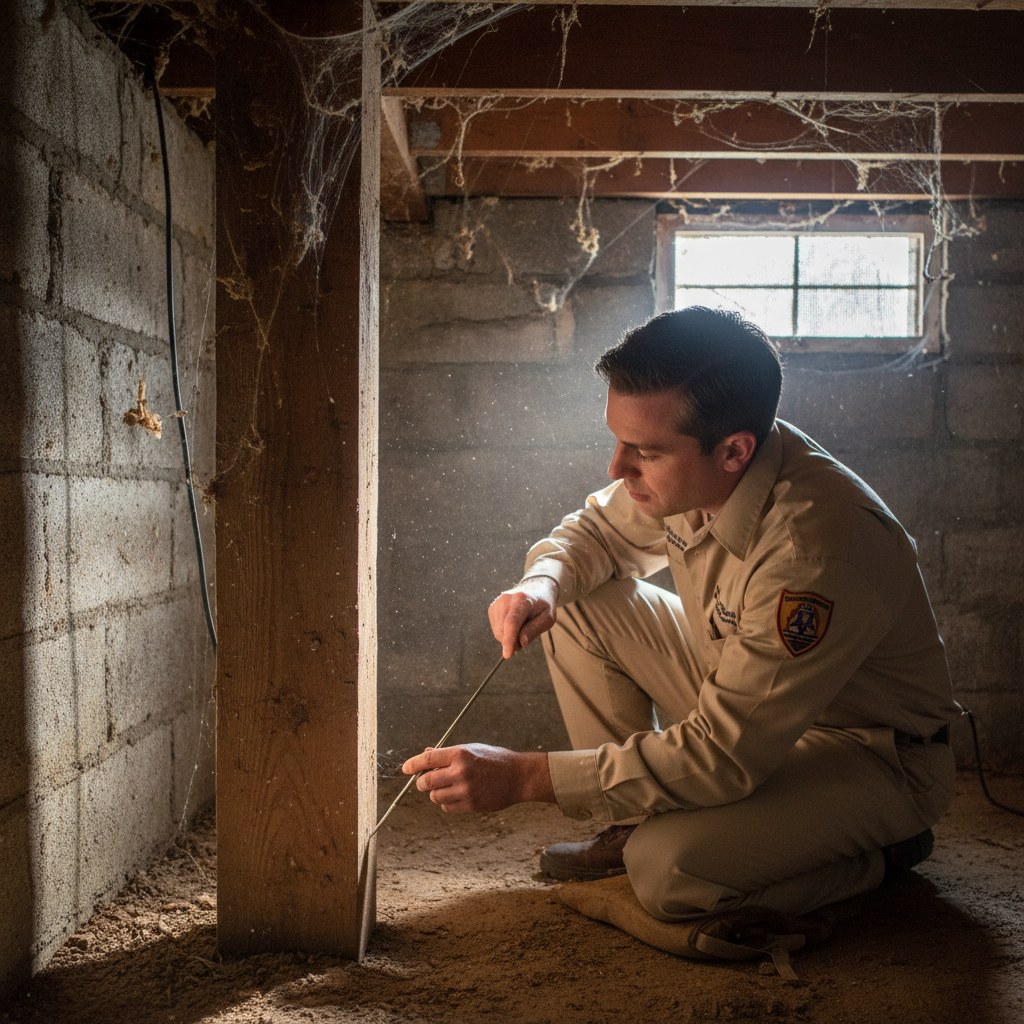
- Inspect from soil to soffit We inspect foundation perimeters, crawlspaces, deck connections, and any wood retaining walls. Moisture readings point us to the areas where Wollochet’s dampness may hide active termite work.
- Treat the active routes Based on live activity and the termite species, we choose targeted soil treatments, above-ground baits, or wood injections. Treatment lines follow the property’s drainage and shoreline exposure.
- Reduce local moisture drivers We recommend cutting back soil-to-wood contact, regrading where water pools near the foundation, and adding crawlspace ventilation or vapor barriers where the marine air keeps things wet.
- Schedule seasonal monitoring Because Wollochet’s climate keeps termite pressure higher than inland areas, we return on a schedule to check bait stations and freshly vulnerable spots before new colonies establish.